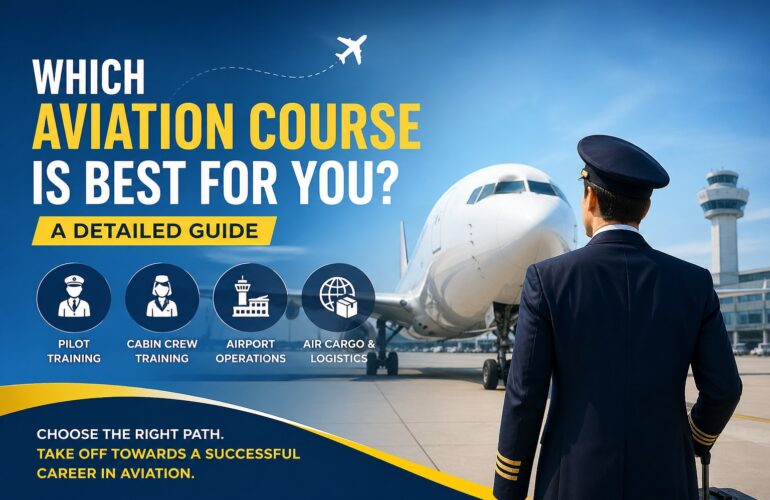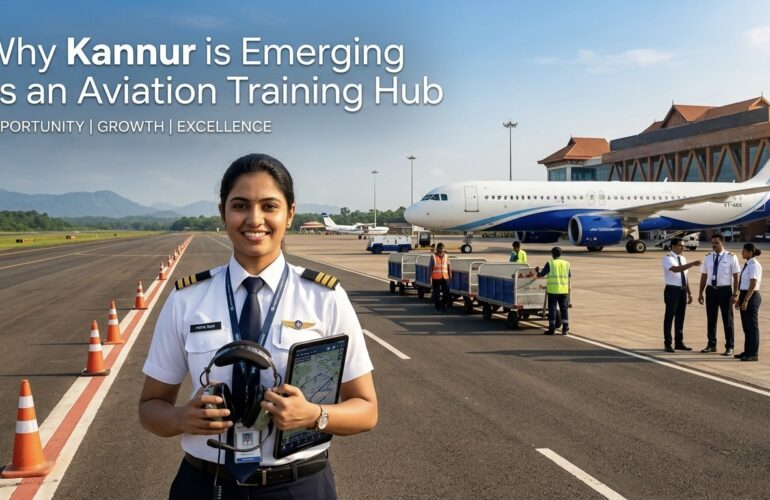
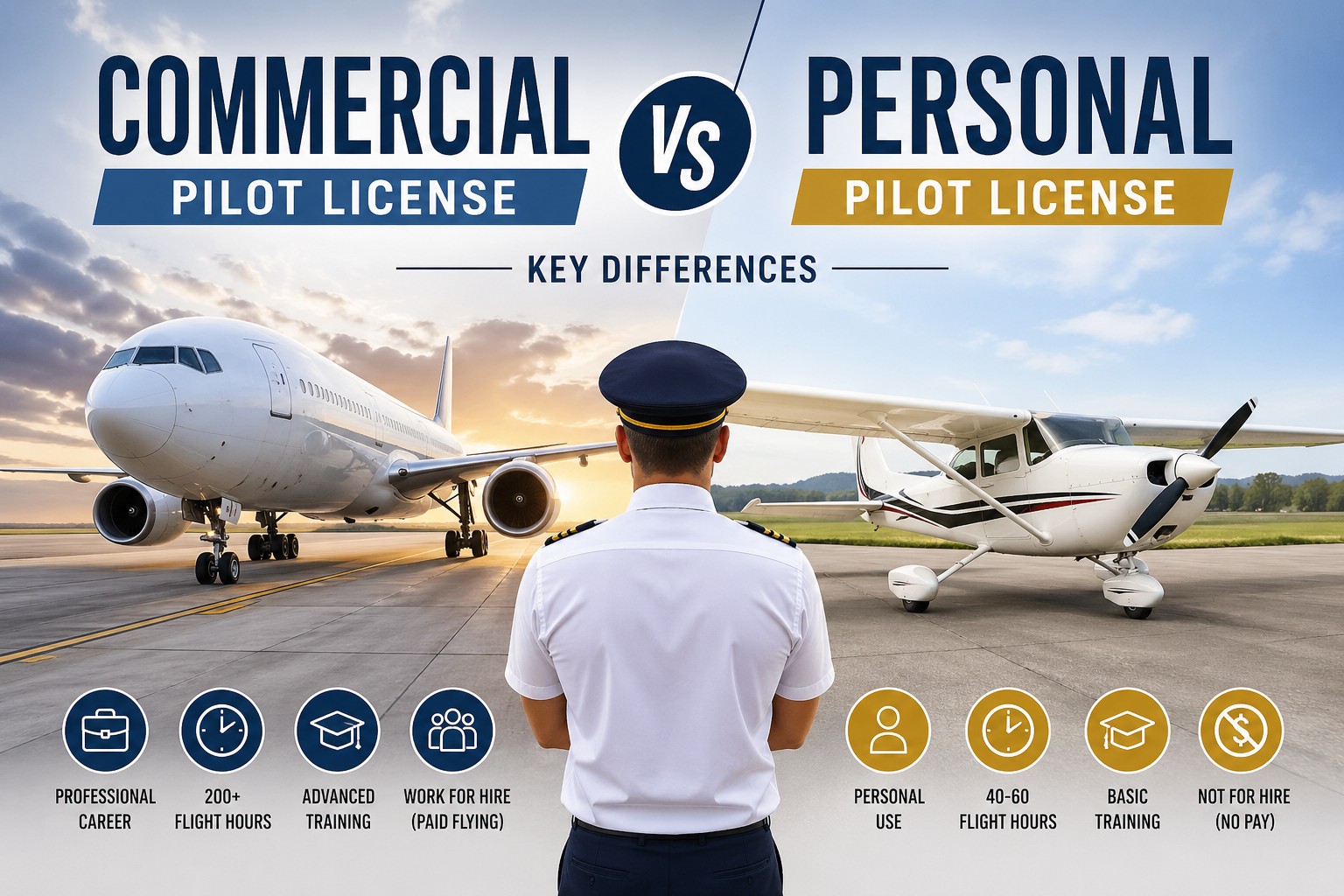
Aviation has always captured the imagination of those who dream of soaring above the clouds, but not every pilot takes the same path to the skies. If you’re exploring a career in aviation or simply pursuing flying as a passion, understanding the distinction between a commercial pilot license and a personal pilot license is your first critical step. These two licenses represent very different levels of commitment, training, and opportunity. Whether your goal is to fly professionally or simply enjoy the freedom of private flight, choosing the right path matters. For aspiring aviators in India, accessing quality pilot training in Kerala has made this decision easier than ever, thanks to world class institutions bringing global aviation standards to the region.
What Is a Personal Pilot License?
A personal pilot license, commonly referred to as a Private Pilot License (PPL), is designed for individuals who want to fly for leisure, recreation, or personal travel. It is not intended for commercial or paid operations.
Key features of a personal pilot license include:
- Minimum age requirement of 17 years
- At least 40 hours of flight time (varies by country)
- Medical fitness certificate (Class 2)
- Theoretical knowledge covering navigation, meteorology, and air law
- Allows flying single engine aircraft under Visual Flight Rules (VFR)
The training for a personal pilot license is considerably shorter and less intensive than its commercial counterpart. It gives you the freedom to fly, but within defined limits.
What Is a Commercial Pilot License?
A commercial pilot license (CPL) is the gateway to a professional aviation career. It allows pilots to be compensated for flying, meaning you can work as an airline pilot, charter pilot, flight instructor, or in cargo operations.
Key requirements for a commercial pilot license:
- Minimum age of 18 years
- At least 200 hours of total flight time (DGCA standard in India)
- Class 1 Medical Certificate
- Instrument Rating (IR) – flying in poor visibility conditions
- Advanced theoretical exams covering subjects like advanced navigation, aircraft performance, and meteorology
- Multi engine aircraft endorsement (recommended)
The depth of training required for a CPL is significantly more rigorous. Pilots must master instrument flying, complex aircraft systems, and emergency procedures, because lives and commercial operations depend on their competence.
Side by Side: The Key Differences
Factor | Personal Pilot License | Commercial Pilot License |
Purpose | Leisure / personal use | Professional / paid flying |
Minimum Flight Hours | ~40 hours | 200+ hours |
Medical Class Required | Class 2 | Class 1 |
Compensation Allowed | No | Yes |
Instrument Rating | Optional | Mandatory |
Career Opportunities | Limited | Extensive |
Training Duration | 6-12 months | 18-24 months |
Career Scope: Why the Commercial Route Opens More Doors
For those serious about aviation as a profession, the commercial route offers a dramatically wider scope. CPL holders can pursue careers as:
- Airline First Officers and Captains
- Charter and Corporate Pilots
- Flight Instructors
- Agricultural and Survey Pilots
- Cargo Pilots
The aviation industry in India is growing rapidly, with demand for trained pilots consistently outpacing supply. For students in South India especially, enrolling in a top aviation institution in Kerala has become a strategic choice, combining affordability, quality training, and proximity to a growing regional aviation hub.
Training Pathway: From Personal to Commercial
Many pilots begin with a personal pilot license and build hours before transitioning to a commercial program. This step by step approach helps students:
- Build foundational flying confidence before intensive commercial training
- Accumulate flight hours that count toward CPL requirements
- Make a more informed career decision before committing fully
However, students with a clear professional goal often choose to start directly with a structured CPL program to save time and money overall.
The Role of Location in Pilot Training
India has emerged as one of Asia’s fastest growing aviation markets, and institutions offering structured pilot training in Kerala are uniquely positioned to serve aspiring pilots across South India and beyond. Kerala’s strategic connectivity, growing airport infrastructure, and investment in aviation education make it an increasingly preferred destination for flight training.
The Retro Aviation, for example, has built a reputation for bridging theoretical knowledge with practical, industry aligned training, helping students not just earn their license, but become job ready aviators.
Beyond Piloting: Expanding Into Drone Aviation
The aviation world isn’t limited to traditional aircraft anymore. Unmanned Aerial Vehicles (UAVs), commonly known as drones, represent one of the fastest growing sectors in both commercial and personal aviation. From aerial photography to agricultural surveying, precision logistics, and disaster management, drones are reshaping industries.
For pilots and aviation enthusiasts looking to expand their career portfolio, the opportunity to become a drone instructor is opening new and highly lucrative pathways. Drone instructor certification allows professionals to train the next generation of UAV operators, a role that is increasingly in demand as drone regulations mature and commercial adoption accelerates across India.
Conclusion
The choice between a personal pilot license and a commercial pilot license ultimately comes down to your goals. If flying is your hobby, your weekend escape, the personal route gives you the freedom you need. But if aviation is your calling, the commercial license is your launchpad to a rewarding, high growth career. India’s aviation sector is expanding at a pace that makes this the perfect time to invest in professional pilot training. With access to structured programs through a top aviation institution in Kerala and pathways that extend into emerging fields like drone operations, The Retro Aviation is helping passionate aviators turn ambition into altitude. Your journey starts with one decision, make it count.