
The aviation industry is far more than passenger travel. Behind every international shipment, from life saving pharmaceuticals to consumer electronics, lies a highly coordinated system that keeps the global economy moving. Air cargo management sits at the very core of this system, ensuring that freight is tracked, documented, loaded, and delivered with precision across thousands of flights every day. As global trade grows more complex, the demand for skilled cargo professionals has surged, and so has the value of structured education in this field. For aspiring aviation professionals in India’s northern Kerala region, enrolling in cargo logistics courses in Kannur has become one of the most career defining decisions they can make. The Retro Aviation institute has positioned itself as a trusted name in this space, bridging the gap between industry demand and professional training.
What Is Air Cargo Management and Why Does It Matter?
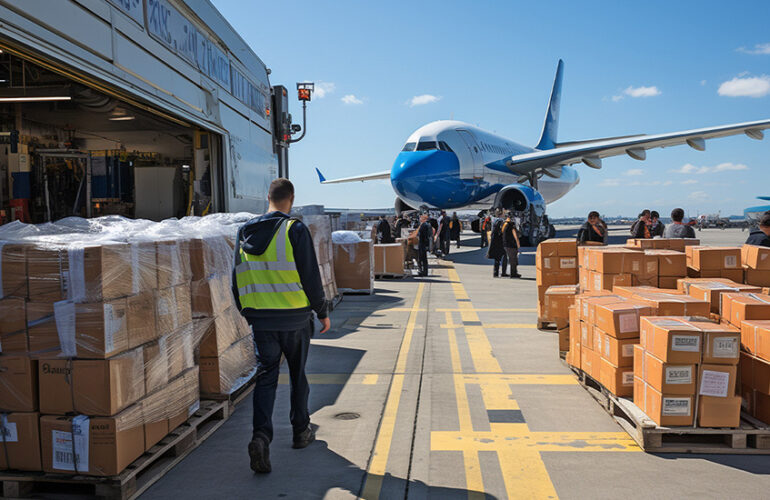
At its core, air cargo management is the end to end process of planning, executing, and monitoring the movement of goods via air transport. It covers everything from booking and documentation to warehouse operations, customs compliance, and last mile coordination.
Here is why it holds such critical importance in global aviation:
- Speed and reliability – Air freight is the fastest mode of international shipping, making it the preferred choice for time-sensitive goods
- Global trade facilitation – Over 35% of world trade by value moves through air cargo channels
- Supply chain resilience – Airlines with strong cargo divisions help buffer supply chain disruptions during crises
- Revenue diversification – Cargo operations contribute significantly to airline revenue, particularly when passenger demand drops
- Regulatory compliance – Proper cargo management ensures adherence to IATA, ICAO, and customs regulations across borders
Without a trained workforce managing these operations, the entire system becomes vulnerable to delays, financial loss, and safety risks.
Core Functions of a Cargo Management Professional
A cargo management professional wears many hats. Their responsibilities span multiple departments and require both technical knowledge and operational decision making.
Key responsibilities include:
- Freight acceptance and documentation – Verifying shipment details, preparing airway bills, and ensuring regulatory compliance
- Load planning and weight distribution – Calculating cargo load to maintain aircraft balance and fuel efficiency
- Dangerous goods handling – Identifying and processing hazardous materials in line with IATA regulations
- Tracking and tracing – Maintaining real time visibility of shipments throughout the transit journey
- Customs and import/export coordination – Liaising with customs authorities to clear shipments without delays
- Warehouse and ground operations – Supervising cargo terminal activities and ULD (unit load device) management
These functions demand professionals who are trained not just theoretically but with practical, industry aligned knowledge, the kind that a well designed cargo management course in Kerala can genuinely deliver.
The Growing Demand for Cargo Professionals in India
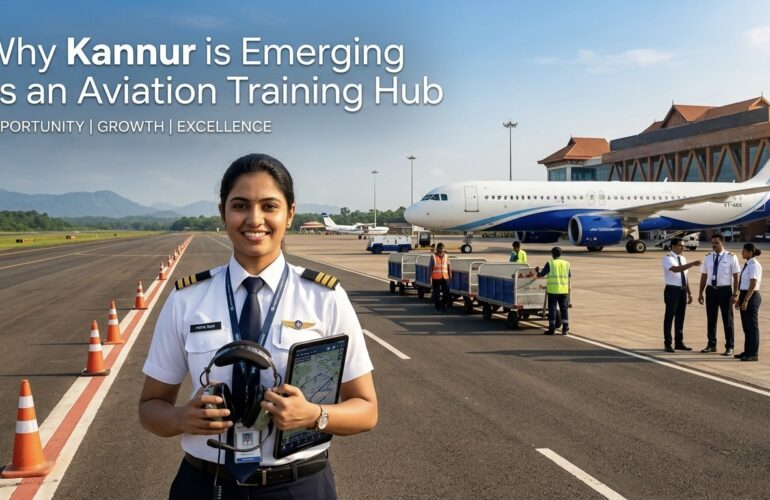
India’s aviation sector has been on a rapid growth trajectory. With the country’s air freight volumes expanding year on year, airports such as Calicut International Airport (Kozhikode) and Kannur International Airport have transformed into significant cargo hubs for South Asia.
This regional growth has created a direct and growing need for certified cargo professionals. Here is what is driving that demand:
- Kannur International Airport expansion – One of Kerala’s newest international airports, actively handling both passenger and cargo flights
- E-commerce boom – The explosion of online retail has made fast and reliable air freight indispensable
- Pharmaceutical exports – Kerala based pharmaceutical companies rely heavily on air cargo for international distribution
- Seafood and perishables – The state’s thriving seafood export industry depends on cold chain air cargo solutions
For students in this region, pursuing a comprehensive cargo management course in Kerala opens direct pathways into airlines, ground handling agencies, freight forwarding companies, and customs brokerage firms.
Why Structured Training Makes the Difference
Aviation cargo is a heavily regulated, technically demanding field. It is not something that can be learned on the job alone. Structured training programmes cover the full scope of what the industry expects, including:
- IATA cargo regulations and dangerous goods (DG) classifications
- Airway bill preparation and e-freight documentation
- Unit Load Device (ULD) management
- Export and import procedures specific to Indian customs law
- Live cargo and perishables handling protocols
- Cargo revenue management and yield optimization
The Retro Aviation institute in Kannur has built its curriculum around these exact industry competencies. Their training aligns with the operational realities of modern airports and cargo terminals, giving students a head start that classroom theory alone cannot offer.
For those looking to specialize further in air cargo management, Retro Aviation’s programme covers both foundational principles and advanced operational skills, making graduates job ready from day one.
Career Pathways After Cargo Training
Completing a professional cargo management programme does not lock a professional into a single role. The qualification acts as a gateway to a wide range of aviation careers:
- Cargo Agent / Cargo Executive at airlines or ground handling companies
- Freight Forwarder managing international shipments end to end
- Customs Clearance Agent coordinating with customs authorities
- Airport Cargo Terminal Supervisor overseeing daily warehouse operations
- Dangerous Goods Inspector ensuring compliance with IATA DG regulations
- Logistics Coordinator in supply chain and third party logistics companies
The versatility of this qualification is a key reason why enrolment in cargo focused aviation programmes has grown significantly across Kerala over the past several years.
Conclusion
Air cargo management is not a background function, it is one of the most critical pillars of the modern aviation ecosystem. As global trade demand grows and regional airports like Kannur expand their cargo infrastructure, the need for skilled, certified professionals will only intensify. Retro Aviation has recognized this opportunity early, offering practical, industry aligned training that prepares students for real world cargo careers. For anyone serious about building a long term career in aviation logistics, the path starts with the right education. And for those ready to explore beyond cargo into the exciting frontier of unmanned aviation, Retro Aviation also offers drone instructor courses, opening yet another high demand career avenue in modern aviation.